
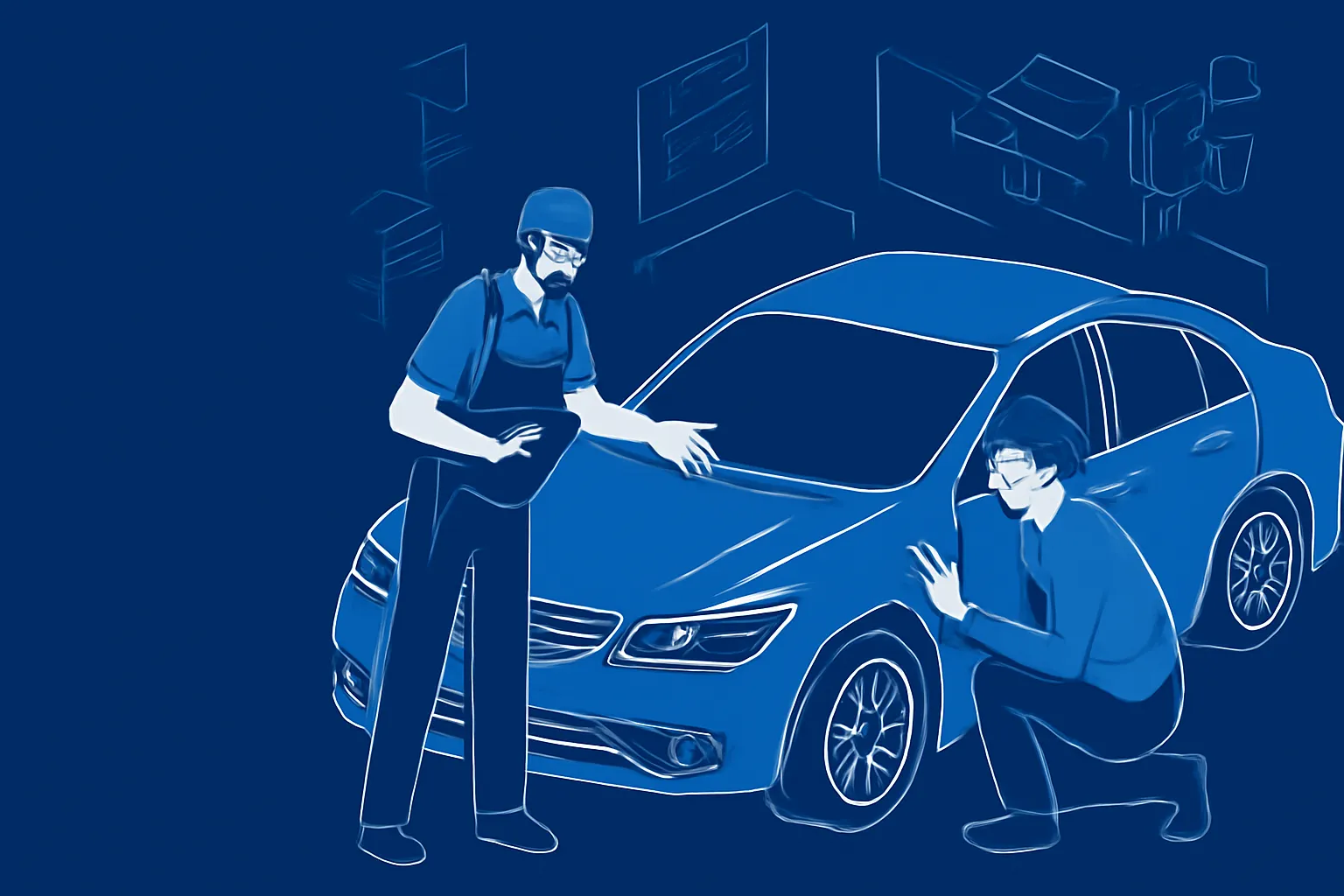
Use a body shop for visible damage and finish, and a mechanical garage for faults, servicing and safety systems; choose a workshop with the right capability when one incident involves both.
Which problem belongs in which workshop?
A body shop is usually the right choice for damaged panels, bumpers, doors, paint, trim and visible corrosion, while a mechanical garage is usually right for engines, gearboxes, brakes, suspension, steering, air conditioning and electrical faults. The distinction is the failed job, not whether the car looks clean or dirty.
A dented door that will not close may need both. The body shop can restore the door skin, hinges and alignment, but a mechanical technician may need to inspect the locking, wiring or restraint system. A dashboard warning with no external damage normally points first to mechanical or electrical diagnosis. A scraped bumper with no warning light normally points first to body repair.
Do not choose only by the word “garage”. Many mechanical garages do not have paint preparation or colour-matching equipment. Many body shops do not have the tools or diagnostic knowledge to investigate drivability, charging, braking or cooling faults. Ask what part of the job the workshop will perform itself and what it will send elsewhere. That answer is more useful than a broad claim that the business handles every repair.
For more context, read Car Ac Repair Without A Dealership In Dubai Or Abu Dhabi.
Working through the same job from the other side? What a Car Repair Quote Should Include in the UAE — A fair UAE car repair quote should identify the fault, parts, labour, tax, exclusions and approval limit so you can compare garages before booking.
How do I choose when one incident needs both?
Choose the workshop that can establish whether the car is safe and structurally sound before cosmetic work begins. After a collision, mechanical and safety checks should come before paint because hidden suspension, steering, lighting, restraint or cooling damage can change the repair plan.
A practical sequence is inspection, fault and damage documentation, safety-related mechanical work, structural or panel correction, paint and finish, then a final functional check. The exact order can change with the vehicle and damage. The important decision is to prevent a polished exterior from hiding an unresolved mechanical problem.
Ask one workshop to act as the named coordinator only if its responsibility is clear. You should know who diagnoses the mechanical issue, who removes and refits parts, who checks alignment or warning lights, and who handles any problem caused during subcontracted work. If two separate workshops are involved, record the handover condition and agree which business approves each stage.
A low first price can become expensive when work is split without coordination. Compare the repair plan, not just the bodywork figure. A workshop that cannot explain the boundary between its own work and outside work may not be the safest choice for a mixed repair.
For more context, read Car Mechanical And Electrical And Ac Repairs Abu Dhabi City.
Which garage suits a car with a fault but no visible damage?
A mechanical garage suits a car that has a warning light, unusual noise, poor starting, vibration, overheating, weak air conditioning, rough running or a service requirement without obvious collision damage. The first need is diagnosis, followed by a repair decision, rather than panel preparation or paintwork.
Describe the symptom in usable terms: when it happens, whether the engine is hot or cold, how fast the car is moving, what warning appears, and whether the problem changes under braking, acceleration or turning. Bring service records if they are available, but do not assume the last replaced part caused the current problem.
Ask whether the proposed first step is diagnosis or replacement. A mechanical garage should be able to explain what it will test before recommending parts. For an intermittent fault, the correct outcome of the first visit may be a finding that more evidence is needed, not an immediate list of replacements.
The right comparison is capability against the fault. A workshop that mainly performs oil changes may not suit a complex electrical or transmission issue. A specialist may suit a difficult system, while a multi-brand garage may suit routine servicing. The best match is the one that can show how it will identify the cause.
Which workshop suits collision and cosmetic damage?
A body shop suits collision damage, dents, scratches, damaged bumpers, paint defects, broken exterior trim and panel misalignment when the car has no unresolved mechanical or safety fault. Its useful capabilities include damage measurement, panel repair or replacement, preparation, paint matching, refitting and finish inspection.
Look beyond a promise to make the car look new. Ask how the workshop will check gaps, closures, lamps, sensors, cameras, trim and water sealing after repair. Modern bumpers, grilles, windscreens and mirrors can carry sensors or cameras, so a visually acceptable repair may still require calibration or a functional check. The workshop should identify any such requirement rather than treating every part as cosmetic.
Photograph the car before handover, including undamaged areas and the fuel or battery condition. Ask for the proposed repair scope in writing, especially where the workshop has not yet removed damaged panels. Hidden damage can change the plan, so an initial estimate should not be treated as a final price.
A body shop is not automatically the cheaper option for a scraped or dented car. If the impact affects steering, suspension, braking, lights or warning systems, choose a process that includes mechanical inspection before cosmetic completion.
What should I compare when two workshops seem suitable?
Compare the diagnosis, repair boundary, parts decision, testing plan and responsibility for the finished job before comparing price. Two businesses can quote for the same symptom while planning different work, so a lower figure may simply exclude inspection, calibration, refitting or related damage.
Ask each workshop to state what it believes is wrong, what it will check first, which work is included, and what would require separate approval. For bodywork, ask whether the scope includes removal, hidden-damage inspection, paint blending, refitting and checks of sensors or lamps. For mechanical work, ask what test confirms the fault and what result would change the recommendation.
Check whether the workshop has the equipment and experience for the specific vehicle system or repair type. A general statement that a business repairs all cars is not enough evidence for a specialist electronic, structural or driver-assistance problem. Ask who performs outsourced work and whether the same business remains your contact.
GarageFinderUAE can prepare one enquiry using your car, fault, area and timing for garages that handle the job, so you can compare replies before approving work. It is a quote request and comparison service, not a garage or review site, and it does not publish rankings.
When is the cheapest option the wrong option?
The cheapest option is the wrong option when it cannot explain the fault, excludes a necessary safety check, lacks the required equipment, or leaves responsibility unclear between workshops. A low figure can be sensible for a straightforward cosmetic repair, but price alone cannot show whether the repair solves the underlying problem.
Use a simple decision rule: reject a quote that cannot state what is being repaired, accept a quote only after the workshop explains how it will verify the result, and seek another opinion when the proposed work does not match the symptom or visible damage. The rule applies to both a body shop and a mechanical garage.
Do not confuse a higher price with better work. A workshop may cost more because it includes diagnosis, calibration, specialist labour or a more complete repair, but those items should be visible in the scope. Conversely, a high price without a clear explanation is not evidence of quality.
Ask what happens if inspection reveals additional damage. You should know whether the workshop will pause for approval, document the change and revise the scope. The safest comparison is between like-for-like plans with the same problem definition, not between unexplained totals.
How do I split the work without losing control?
Split the work only when each stage has a clear owner, handover record and approval point. Using a body shop for panels and a mechanical garage for suspension or electrical work can be sensible, but the arrangement becomes risky when neither business accepts responsibility for the complete result.
Before moving the car, record its condition, mileage, dashboard warnings, keys, accessories and visible damage. Give both workshops the same description of the incident and ask each to list what it has checked. Keep photographs, diagnostic findings and approvals together. Do not rely on a verbal handover that leaves the next workshop guessing what has already been removed, replaced or tested.
Decide who will coordinate parts, transport, subcontracting and final testing. If a body shop removes a sensor, lamp or bumper and a mechanical garage later investigates a warning, identify which business is responsible for refitting and calibration. If the cause cannot be assigned, ask for the evidence before approving another repair.
A single capable workshop may be simpler for a mixed job, but only if it genuinely has the required capabilities or clearly manages trusted specialist work. Two specialists can be better when the boundaries are documented. Convenience is not a substitute for ownership.
Where does GarageFinderUAE fit in this decision?
GarageFinderUAE fits before approval, when you know the problem or suspected problem but still need suitable UAE garages and comparable replies. You describe the car, fault, area and timing once, and the enquiry is prepared for garages that handle that job. That can help separate bodywork requests from mechanical diagnosis before you hand over the keys.
The service does not decide that a car needs a body shop or mechanical garage, inspect the vehicle or set the final repair price. It is not a garage and not a review site, and it does not publish rankings. You still need to explain symptoms accurately, ask what each garage will inspect and check the scope before authorising work.
Every AED figure on the site is a typical or estimated range for comparison, dated on the page, never a quote. The garage sets the final price after inspection. Treat any range as a way to spot an obviously incomplete comparison, not as a promise that your car will be repaired for that amount.
Use the enquiry to request the capability you actually need. Say whether the issue is collision damage, a mechanical symptom or both. Include photographs where relevant, but do not let photographs replace a safety or diagnostic inspection.
What is the final decision before handing over the keys?
Hand the car to the workshop that can clearly match its capability to the problem, explain the first inspection, define the repair boundary and accept responsibility for the agreed work. Choose a body shop for exterior restoration, a mechanical garage for faults and servicing, or a coordinated plan when both are genuinely required.
Before approval, ask four direct questions in ordinary language. What do you think is wrong? What will you check before repairing it? Which work and parts are included? What requires my approval if the inspection changes the scope? A workshop that answers these questions plainly gives you a stronger basis for comparison than one that only gives a total.
If the car is unsafe to drive, do not turn the body shop versus mechanical garage choice into a roadside experiment. Arrange appropriate recovery and tell the workshop the car may have an unresolved safety issue. If the car is drivable but the symptom is unclear, request diagnosis before authorising replacement parts or cosmetic work.
The fair choice is not always the lowest AED figure. It is the repair plan that fits the failure, exposes its assumptions and leaves you able to approve each material change.
Read next: Car AC Repair Without a Dealership in Dubai or Abu Dhabi — Use an independent workshop for most UAE car AC faults; compare the typical estimated AED 250 to AED 700 starting range, diagnosis, parts and leak-test. For what the job should cost before you ask anyone for a price, see Major & minor service.
