
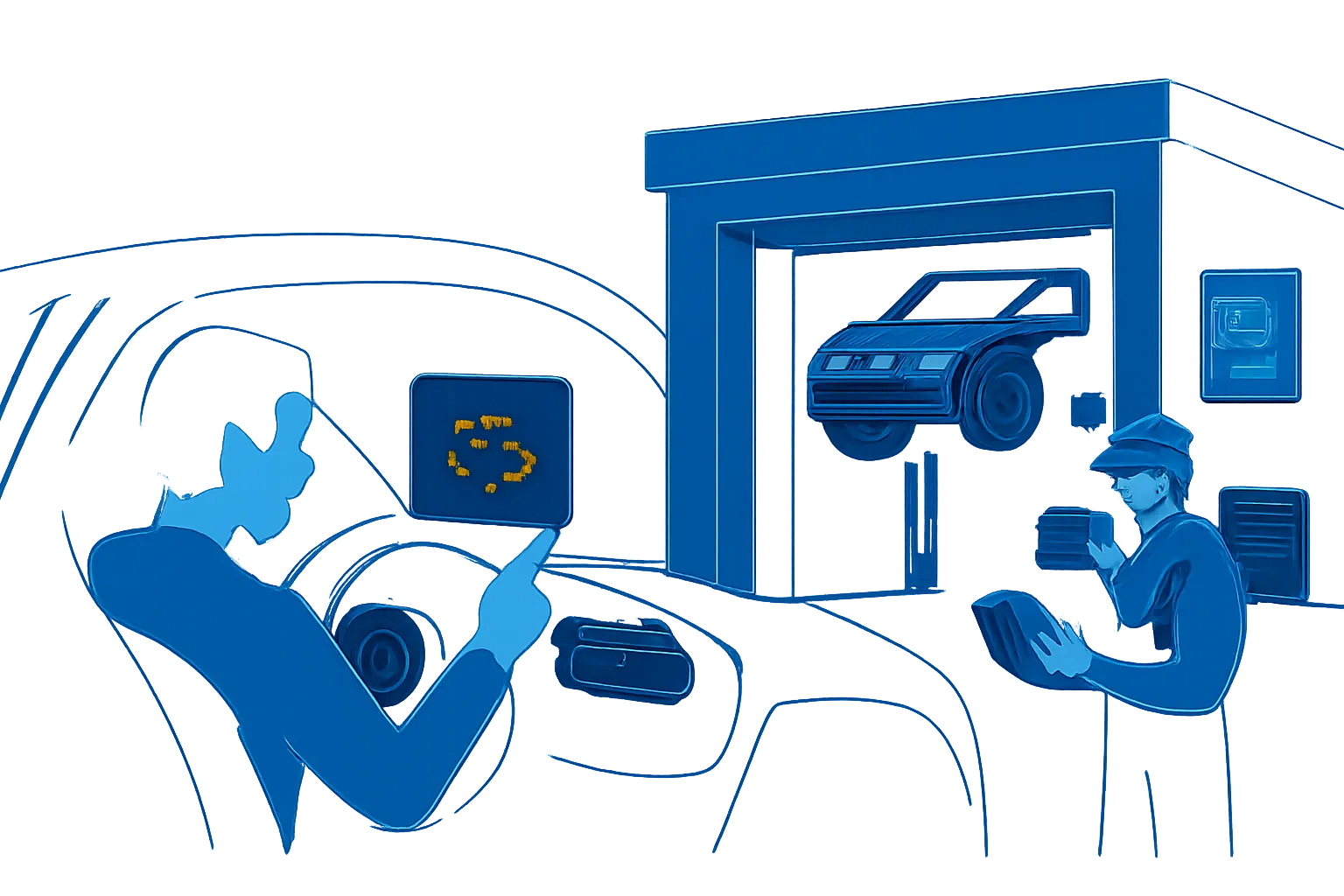
A steady check engine light usually permits a careful trip for diagnosis, while a flashing light, severe loss of power or overheating means you should stop and seek professional help.
What should you do first when the check engine light appears?
A newly lit check engine light should be treated as a diagnostic warning, not an automatic instruction to replace a part. Note whether the light is steady or flashing, whether the engine feels different, and when the warning appeared. Record recent events such as refuelling, battery work, water exposure, overheating or a missed service.
Check that the fuel cap is fitted correctly, but do not keep driving repeatedly hoping the warning will disappear. Do not disconnect the battery before diagnosis, because that can erase useful fault information and reset readiness data. If the car is running smoothly and the light is steady, drive gently to a suitable garage rather than accelerating hard or carrying on with a long journey.
A basic diagnostic scan has a typical estimated cost of AED 100 to AED 250, based on a scan and initial fault-code reading only. The garage sets the final price after inspection, and a scan is not the same as a completed repair. Ask whether the charge includes a short explanation of the stored code and whether further testing is needed. A code identifies a system or condition, not always the failed component.
For more context, read Car Diagnostic Cost In Dubai What A Scan Includes.
Working through the same job from the other side? MySyara Alternatives in the UAE: Which Fits Your Repair? — Compare MySyara with garages, mobile mechanics, dealers, roadside help and quote services by urgency, diagnosis and control over the final price.
Is the check engine light steady or flashing?
A flashing check engine light is the urgent case because it can indicate an active combustion fault that may damage the exhaust system or leave the vehicle unsafe to operate. Reduce speed, avoid hard acceleration, and stop in a safe place if the engine shakes, loses power, smells strongly of fuel or produces smoke. Arrange professional assistance rather than driving across Dubai or Abu Dhabi to find a cheaper workshop.
A steady light with normal engine behaviour is usually less urgent, but it still needs diagnosis soon. A steady warning can relate to emissions, fuel vapour, sensors, ignition, fuel delivery or another monitored system. The absence of noise does not prove the problem is minor.
The warning light should be considered alongside other dashboard messages. Oil-pressure, coolant-temperature or braking warnings can require immediate stopping even if the check engine light is steady. UAE road and vehicle requirements can change, so check current guidance from the relevant emirate authority before relying on a dashboard-warning assumption. Never clear the light simply to pass a vehicle inspection without finding the cause.
For more context, read What a Car Repair Quote Should Include in the UAE.
Could a fuel cap or recent refuelling explain the warning?
A loose or damaged fuel cap is one of the simplest possibilities after refuelling, especially when the car drives normally and the light is steady. Remove and refit the cap until it seals as designed, then monitor the vehicle without repeatedly resetting the system. A missing seal, cracked cap or damaged filler area can allow fuel vapour to escape and may keep the warning active.
Low fuel itself is not a reliable explanation for every check engine light. Poor-quality or contaminated fuel, water in the fuel system and a refuelling fault can also affect engine operation. If the engine hesitates, misfires, stalls or smells strongly of fuel, do not treat a cap check as a complete diagnosis.
A garage can test the evaporative-emissions system if the warning returns or remains present. A typical estimated AED 150 to AED 450 diagnostic charge, based on a basic scan plus targeted smoke or system testing, may apply, but the garage sets the final price after inspection. Replacement caps, hoses and valves vary by vehicle. Ask the garage to identify the failed test result before approving parts, because replacing a cap will not fix a wiring, sensor or fuel-quality problem.
Which causes are most likely, in order?
The most practical order is to check simple sealing and voltage issues first, then ignition and air-fuel faults, followed by sensors, exhaust after-treatment and less common wiring or control-module problems. The exact order changes with the vehicle, engine, fault code and symptoms.
A loose fuel cap or an evaporative leak is plausible when the car feels normal after refuelling. Low battery voltage or recent battery replacement can create stored faults, but voltage should be tested rather than assumed. Worn spark plugs, ignition coils, injector problems or air leaks become more likely when the engine shakes, hesitates or loses power. Oxygen, airflow, pressure and temperature sensors can report abnormal readings without being the root cause.
A catalytic-converter or exhaust-efficiency warning needs proper testing before replacement. A failed ignition component can create the condition that damages the converter, so fitting an expensive exhaust part first may not solve the problem. Wiring, connectors and grounds deserve attention where the fault is intermittent or follows water exposure. A typical estimated repair range of AED 200 to AED 3,500, based on the difference between a minor sensor or hose repair and larger exhaust or fuel-system work, is a comparison guide only. The garage sets the final price.
What should a check engine diagnosis include?
A useful diagnosis should connect the stored code to the vehicle’s actual symptoms and test results before a part is approved. The process normally starts with a scan, but a code alone is not proof that the named sensor, coil or valve has failed. The technician should check relevant live data, wiring, connectors, operating conditions and related systems where the fault could originate.
Ask whether the code is current, pending or historical, and whether the warning was cleared before you arrived. Ask what test will confirm the proposed repair and what will happen if the warning returns. For a misfire, that may involve checking ignition, fuel delivery and compression rather than changing all spark plugs automatically. For an emissions code, the technician may need to test leaks, sensor readings and exhaust performance.
A typical estimated diagnostic cost of AED 150 to AED 500, based on scan work and targeted testing rather than parts, can be reasonable for a fault that needs more than a code read. The garage sets the final price after inspection. Diagnosis is worthwhile when it prevents a cheaper part from being replaced without evidence. Get the code, test finding and recommended next step in writing before authorising repair.
When should you stop driving and seek professional help?
Stop driving and seek professional help when the check engine light flashes, the engine shakes severely, power drops sharply, the car overheats, smoke appears, fuel smells are strong or another critical warning joins the light. Continuing can turn a manageable ignition or cooling fault into broader engine, exhaust or roadside-recovery damage.
A steady light with smooth running usually allows a short, gentle journey to a garage, but avoid high speeds, heavy loads, long motorway trips and hard acceleration. If the vehicle is due for a service and the light appeared without symptoms, book diagnosis promptly rather than waiting for the next routine visit. A warning that disappears still deserves attention if it returns or if the car has a history of repeated faults.
Roadside assistance may be safer than driving when the car is in an exposed location, cannot maintain traffic speed or has a fuel, oil or coolant leak. Do not open a hot cooling system or work near moving belts. Costs for recovery and repairs vary by vehicle, location and provider, so no fair AED figure can be assigned without those details. Follow current road-safety and vehicle guidance from the relevant UAE authority because rules and inspection requirements can change.
Which repair option suits the fault and your budget?
The right repair option is the one that matches the confirmed fault, not the cheapest part advertised for the warning code. A general multi-brand workshop can suit common ignition, sensor, hose and emissions diagnosis when it has the equipment and experience for your vehicle. A manufacturer specialist may be more suitable for complex engine management, unusual fault patterns, software-related issues or a vehicle that needs brand-specific diagnostic access.
For a simple fault, a garage may diagnose and repair in one visit. For an intermittent fault, the sensible option may be paid testing first, followed by repair after the evidence is clear. That approach can cost more initially but may avoid several unsuccessful part changes. Parts can be original, approved aftermarket or used, but the option should be stated before work begins and matched to the vehicle’s requirements.
A typical estimated AED 300 to AED 2,000 repair range, based on common ignition, sensor, hose and minor emissions repairs, is only a comparison guide. Larger exhaust, fuel or control-system repairs can exceed it. The garage sets the final price after inspection. If a vehicle is under a manufacturer or third-party warranty, check the applicable terms before authorising outside work.
How can you compare UAE garages before approving diagnosis?
Compare garages on diagnostic scope, relevant vehicle experience, location, timing and written findings, rather than choosing solely by the first low price. Give each garage the same information: make, model, engine, warning-light behaviour, symptoms, recent work and area. Ask whether the requested service is a scan only, a diagnosis with testing, or diagnosis plus repair.
GarageFinderUAE is a quote request and comparison service for UAE car owners. You describe the car, fault, area and timing once, and the enquiry is prepared for garages that handle that job so you can compare quotes before approving work. It is not a garage or a review site, and it does not publish rankings.
Every AED figure on GarageFinderUAE is a typical range for comparison, dated on the page, never a quote. The garage sets the final price after inspection. That distinction matters particularly for warning lights, because two cars with the same code can need different testing and repairs. Before handing over the keys, confirm who will diagnose the car, what authorisation limit applies, whether a road test is included and how you will be told about additional work. Keep the original fault information and ask for the final diagnosis.
Read next: Car Overheating Repair Options and Costs in the UAE — Stop safely, identify likely overheating causes, and compare the checks, repairs and typical AED price ranges before approving work in the UAE. For what the job should cost before you ask anyone for a price, see Major & minor service.
