
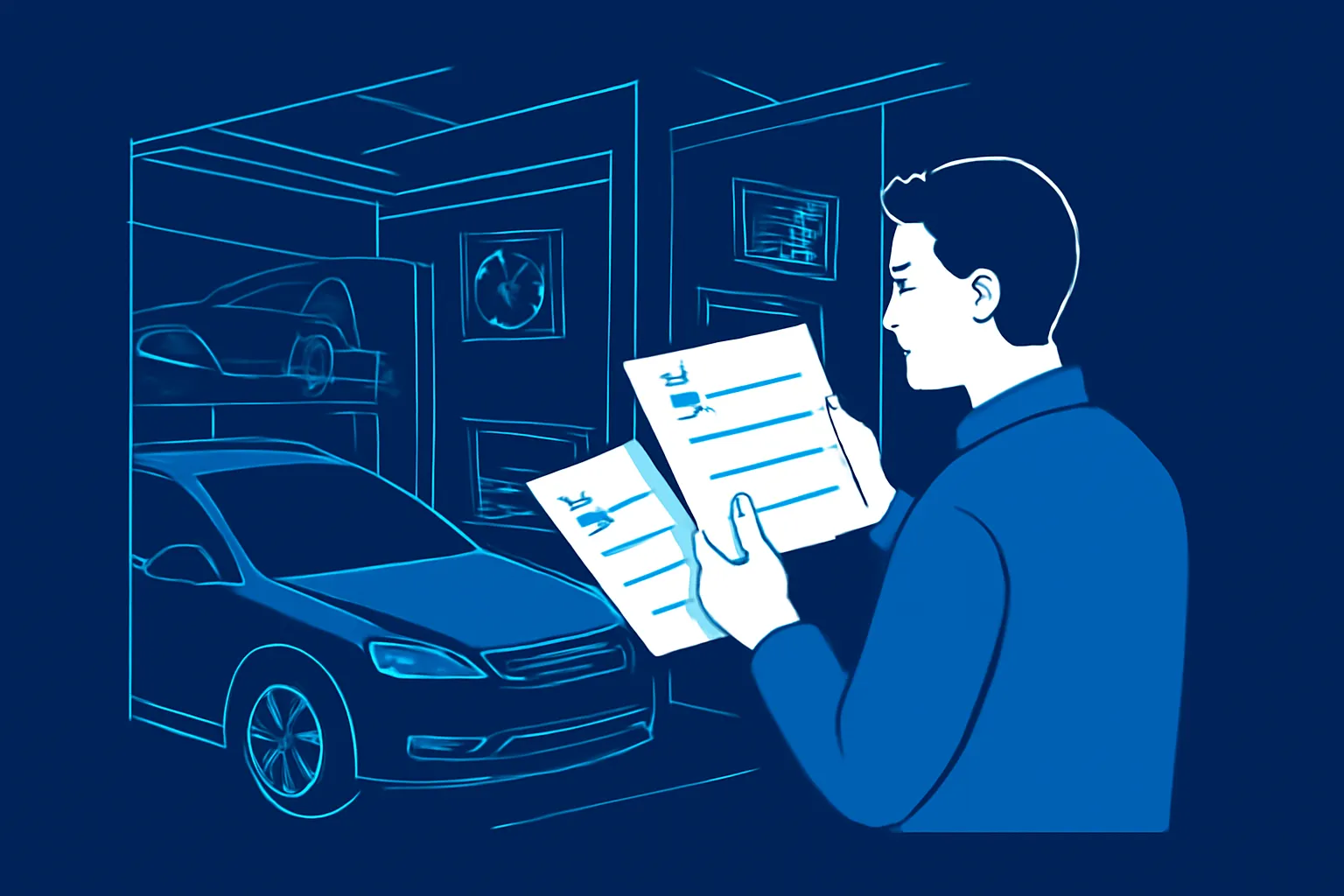
Find a UAE garage by matching your car’s brand, model, engine and fault to the workshop’s actual equipment and experience, not just its signboard; a typical estimated diagnostic fee is AED 150 to AED 350.
How do I match a garage to my exact car?
Match the workshop to your car’s brand, model generation, engine and fault before you ask for a booking. A garage that regularly services a petrol Toyota may not be the right choice for a hybrid Toyota, just as a workshop familiar with older BMWs may lack the equipment for a newer model.
Send the garage the registration year, model, engine size, mileage, warning lights and a short description of the problem. Include whether the car is under a manufacturer warranty, has been modified, or has recently had work elsewhere. Ask which technicians and diagnostic systems will handle the vehicle.
A typical estimated diagnostic fee in the UAE is AED 150 to AED 350, based on an initial scan and inspection, not a repair quotation or guarantee. The garage sets the final price, and some workshops may credit the fee against approved repairs while others may not. Ask that question before handing over the keys.
The useful test is not whether a garage displays your badge. The useful test is whether it can name the system it will inspect, the information it needs from you, and the point at which it will request approval before dismantling anything.
For more context, read Car Diagnostic Cost In Dubai What A Scan Includes.
Working through the same job from the other side? Where to Find a Range Rover Garage in Dubai by Need — A Range Rover garage in Dubai can be checked by area, fault and quote; a diagnostic check is typically estimated at AED 150 to AED 300.
Which workshop type suits my car brand and fault?
Choose a dealer, independent specialist or general garage according to the fault, warranty position and need for brand-specific equipment. A dealer may suit a vehicle covered by a manufacturer warranty or a complex software-related issue. An independent specialist may suit routine servicing or a known fault on an older vehicle. A general garage can be appropriate for simpler jobs when it can show relevant equipment and experience.
The common mistake is treating these categories as a quality ranking. They are different fits for different jobs. A tyre, brake or battery issue may not require a brand specialist, while an intermittent electronic fault, hybrid system warning or air suspension problem may.
Ask whether the workshop has worked on your exact model and whether the proposed repair uses original, equivalent or aftermarket parts. Ask what difference that choice makes to compatibility, warranty and expected life. Get the answer in writing on the quote.
Do not select a workshop solely because it is cheaper or carries a familiar logo. Select the option that can explain the fault, identify the necessary equipment and separate diagnosis from approved repair work.
For more context, read Garages by Car Brand in the UAE — Faults, Costs, Workshops.
What should I ask about brand-specific diagnostic equipment?
Ask whether the garage can perform manufacturer-level diagnostics for your exact model, rather than relying only on a generic fault-code reader. Generic tools can identify some engine and emissions faults, but they may not access every body, safety, transmission, battery or driver-assistance system.
Ask the workshop to state which systems it can scan, whether it can carry out required resets or calibrations, and whether software updates or coding are included in the proposed work. The answer should be specific enough for you to understand what the technician will actually do. “We work on all brands” is not the same as confirming coverage for your vehicle.
Request a copy of the diagnostic findings before authorising parts. A fault code identifies a system or condition, not automatically the failed component. A careful garage should explain what additional testing separates a likely cause from a confirmed cause.
For a typical estimated diagnostic visit of AED 150 to AED 350, based on an initial scan and inspection, ask what the fee includes. The garage sets the final price. Confirm whether a road test, physical inspection, report or second scan costs extra.
How can I tell whether the quoted part suits my brand?
Confirm the exact part number, supplier category and warranty before approving brand-specific repairs. “Genuine”, “original equipment”, “equivalent” and “aftermarket” are not interchangeable descriptions, and the correct choice can depend on the model year, engine and installed system.
Ask the garage to identify the part on the quote and explain whether it is new, reconditioned or used. For safety-critical parts, ask why the proposed option is suitable and what warranty covers the part and labour. Keep the answer with your invoice and photographs of any visible replacement where practical.
Parts that look similar can have different connectors, software requirements or specifications. A sensor may need calibration after installation. A battery may need registration or coding. A brake component may fit physically but still be a poor match for the vehicle’s specification.
Do not authorise a cheaper substitute simply because the line item has the same name. Ask what risk, lifespan or compatibility difference the garage is accepting. The fair comparison is between complete solutions, including labour, calibration, consumables and warranty, not between two incomplete part prices.
What must a brand-specific repair quote include?
A useful quote names the diagnosis, repair, parts, labour, consumables, taxes where applicable and any work that still needs approval. It should also identify the vehicle by registration or VIN, so the garage cannot accidentally quote for a similar model with a different engine or braking system.
Ask the workshop to separate confirmed work from recommended work. A worn belt found during an inspection is not the same as the cause of the warning light. The quote should say whether inspection, dismantling, testing, programming and road testing are included or charged separately.
The garage sets the final price, so a typical estimated figure is only a comparison point. For example, the typical estimated diagnostic range of AED 150 to AED 350 is based on an initial scan and inspection, not on replacing a failed component. Do not treat that range as a repair price or guarantee.
Set an approval limit before work starts. Ask the garage to contact you with evidence and a revised total if the repair exceeds that limit. Save messages, the quote and the final invoice. Those records make it easier to challenge unclear additions or check whether the completed work matches what you approved.
When is a dealer worth the extra distance or cost?
A dealer is most defensible when your car has active warranty obligations, a complex software fault, a recall-related concern or a repair requiring restricted programming. An independent brand specialist can be the better fit for an older vehicle when it has the right equipment, documented experience and transparent parts policy.
Distance alone should not decide the booking. A nearby garage may save travel time but create a second visit if it cannot diagnose the fault. A farther workshop may be sensible for a rare model or a problem that needs specialised calibration. Ask whether the first visit is diagnostic only and whether the garage expects to complete the repair on site.
Check your warranty terms before authorising work outside the dealer network. Requirements vary by manufacturer and contract, and current rules can change. Ask the dealer or warranty provider what records, parts and maintenance evidence they require.
The decision rule is simple: use the dealer when access, warranty or software capability matters more than convenience. Use an independent specialist when it can prove relevant model knowledge and offer a clear, comparable scope of work. Neither label by itself proves that a workshop is the right choice.
How do I check a garage before handing over the keys?
Check the workshop’s identity, written scope, custody arrangements and approval process before leaving the car. Record the mileage, fuel level, existing damage and belongings, then photograph the exterior and dashboard. Remove valuables and keep the key handover limited to what the garage needs.
Ask who is responsible for the vehicle while it is on the premises, whether a road test is required, and how far the car may be driven. Confirm whether test driving is covered by the garage’s insurance and whether you will receive the old parts. The garage should be able to explain these arrangements without treating basic questions as an inconvenience.
Ask for a job card showing the registration, agreed inspection, reported symptoms and your contact details. Do not sign a blank authorisation. If the garage finds additional work, require a message or revised quote before it proceeds.
For a fault that affects steering, braking, overheating or warning systems, ask whether the car is safe to drive to the workshop. If it is not, arrange suitable recovery rather than relying on a short journey. UAE road and vehicle requirements can change, so check current official guidance where the situation involves roadworthiness or recovery arrangements.
How should I compare two garages for the same brand?
Compare two garages by diagnosis, scope, parts, warranty and communication, not by the headline price alone. Ask both workshops the same questions: have you worked on this exact model, what equipment will you use, what is included in the inspection, and what must I approve separately?
Place the quotes side by side and mark missing information. One garage may include calibration, fluids and a road test while another lists only the component. One may use a branded part and another an equivalent. A lower total is not comparable until those differences are clear.
Check whether each garage offers a written warranty for parts and labour, and note exclusions such as wear, unrelated faults or customer-supplied parts. Ask what happens if the original symptom remains after the proposed repair. A confident answer is not a guarantee of success, but an unwillingness to explain the process is a useful warning.
Use the typical estimated diagnostic range of AED 150 to AED 350, based on an initial scan and inspection, only to identify a major pricing difference. The garage sets the final price. Choose the garage whose evidence, scope and approval process you can understand before work begins.
Read next: Where Can You Get Your Audi Repaired in Dubai? — Use an Audi repair garage in Dubai for local diagnosis and repairs, with a typical estimated AED 250 to AED 600 basic inspection cost to compare. See also Audi specialists.
